Vastu Purusha Mandala
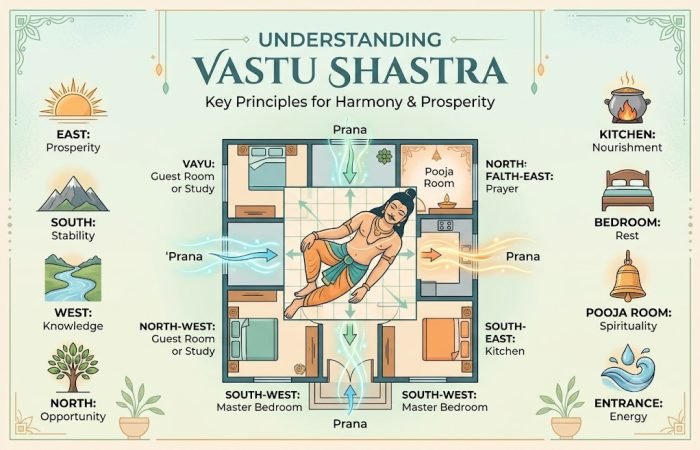
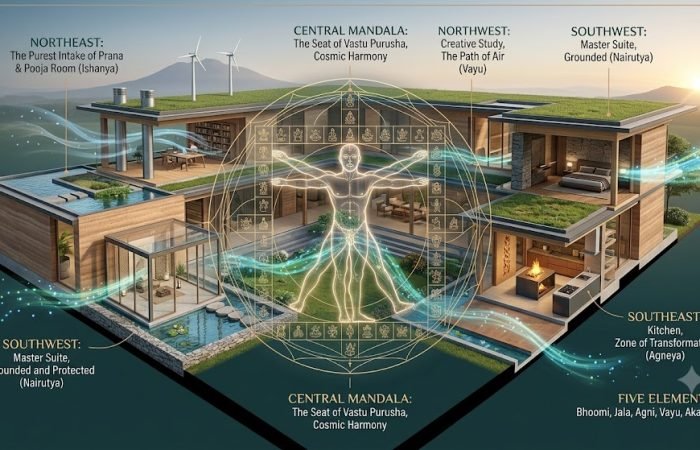
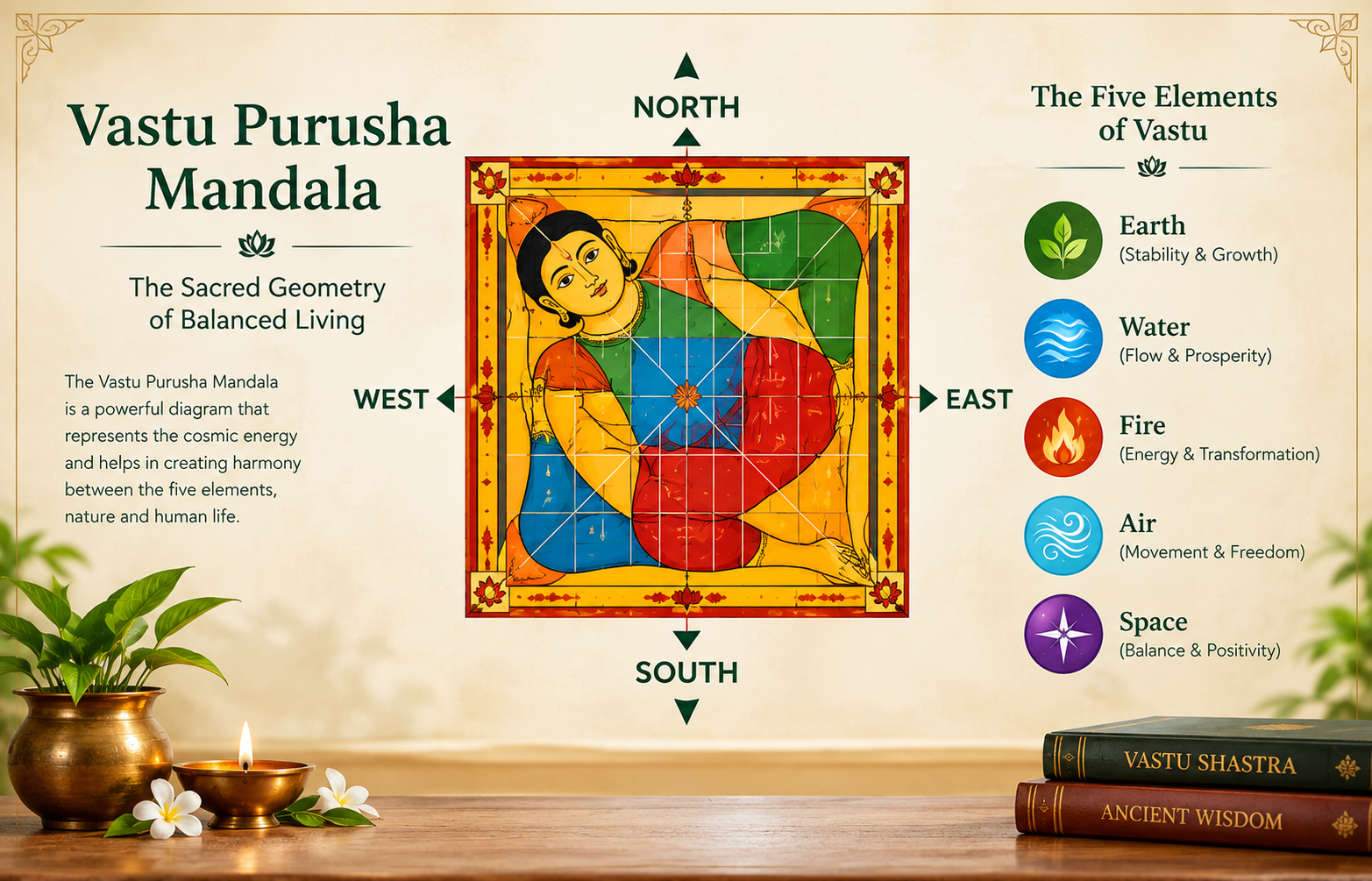
The Vastu Purusha Mandala is an important geometric diagram in the traditional system of Vastu Shastra. It represents the relationship between space, directions, nature, and the built environment. The Mandala is generally shown as a square divided into a grid of smaller sections, with the symbolic figure of Vastu Purusha positioned within it. The four main directions—North, South, East, and West—along with the intermediate directions, play an important role in understanding the layout. Different areas of the Mandala are traditionally associated with various energies, deities, and aspects of life. Architects and Vastu practitioners have historically used the Mandala as a conceptual framework for planning buildings, temples, homes, and other structures. It is also connected with the traditional five elements: Earth, Water, Fire, Air, and Space. The central area of the Mandala is considered significant and is often associated with openness and balance. In modern times, the Vastu Purusha Mandala continues to be used by people interested in traditional Indian architecture and spatial planning. It provides a symbolic way of thinking about how the arrangement of a building can relate to its surroundings and the natural environment.